Woodlands.co.uk Woodland for Sale in the UK 2025-12-17T20:12:05Z https://www.woodlands.co.uk/feed/atom/ The blog at woodlands.co.uk http://www.woodlands.co.uk <![CDATA[Orchid germination]]> https://www.woodlands.co.uk/?p=42769 2025-12-17T20:12:05Z 2025-12-17T20:12:05Z

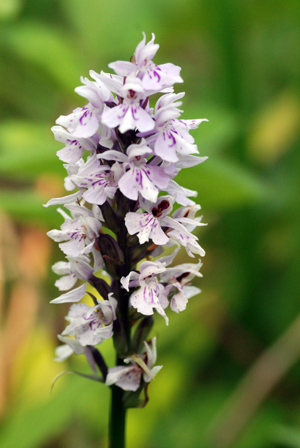
Orchids are unusual, indeed exotic plants. After they have produced their flowers and they have been pollinated, the flower wilts and the ovary begins to swell to form a seed pod.  The time it takes for a seedpod to mature varies from species to  species, it may take eighteen months for a type of slipper orchid [Paphiopedilum].  When the capsule is mature, it splits open and its numerous, minute seeds are dispersed by the wind.  A single seed pod may contain millions of the dust-like seeds; a single seed may compared to a ‘speck of dust’.  

Unlike the seeds of ‘normal’ plants, the seeds have no food reserve within them and in order to grow, they have to establish a symbiotic relationship with a specific mycorrhizal fungus.  This symbiosis is essential for the seed to germinate and grow.  The fungus enters the seed and provides the necessary nutrients for its development into a seedling. Propagating orchids from seeds is a complex process. sometimes done under sterile laboratory conditions using special culture media. In the wild, although an orchid may produce millions of seeds, only a minute fraction will successfully establish a symbiotic relationship with the correct fungal partner to grow and survive.

Recent research with the orchid Cremasta variabilis has revealed some interesting facts about the germination of the seeds.  The orchid is found on the Korean Peninsula and is an insect pollinated, terrestrial orchid.  As with other orchids, its seeds are minute and are known to depend on a certain fungus to grow and develop.  In the past, most studies have focused on the fungi present in mature orchids but the team from Kobe University studied very young seedlings.  They noted that seedlings were often to be found near decaying logs, and this led them to test whether deadwood fungi are involved in early orchid development.  

They buried seeds of four species of orchid in various forest locations, but they only observed germination  and seedlings near to decaying logs.  The seedlings were found to be exclusively associated with wood decaying fungi.  It may be that the orchids use other fungi to maintain the symbiosis as the deadwood dries out or is exhausted of nutrients.

Some species of orchids have abandoned photosynthesis completely, and feed via fungi through their lives - a phenomenon known as mycoheterotrophy.  As woody (and rotting) debris represents a major carbon source in forests, it is a resource waiting to be exploited.


]]>
0
The blog at woodlands.co.uk http://www.woodlands.co.uk <![CDATA[Watching insects on the move]]> https://www.woodlands.co.uk/?p=42855 2025-12-05T17:56:56Z 2025-12-05T17:56:56Z

Scientists from the Meteorological Office use radar data to track approaching storms and changing weather patterns.   The radar works by sending out pulses of microwaves, these bounce off rain drops and other particles in the air.  The time that it takes for this signal to return, plus its intensity gives information about the approaching weather.

Early radar [during the Second World War] also picked the movement of ‘angels’. These ‘angels’ were later recognised as the movement of birds, bats and insects.  Scientists then had to develop techniques to remove this ‘biological scatter / material’, so that they could accurately predict storms etc. By removing this ‘biological component’ of the signal, a lot of biological information about the movement of birds, bats and insects was being ‘discarded’.  

Now, scientists from the University of Leeds have ‘repurposed’ the radar data (from many radar stations, which scan the skies many times each day & night) but this time they remove the data relating to the weather.  This leaves information about the insects moving at a height of some 500 / 700 metres above the ground. 

The results showed that some 11.2 trillion insects are moving during the day, and that this reduces to some five trillion at night.   Some of these insects are actively flying, but some are being carried by the wind  / thermals.  Furthermore, there were more insects above areas such as woodlands, grasslands and even urban areas.  However, the numbers were lower over intensively farmed areas, where plant biodiversity was reduced as compared to woodland or natural grassland.  The numbers were also lower where artificial lighting was high.  

Other work by the CEH, Newcastle University and Butterfly Conservation, has involved surveys of grassland and hedgerows in southern England (Thames Valley) some of which were lit by streetlamp, others were unlit. The areas that were exposed to night time lights had roughly half the number of caterpillars as compared to the unlit areas.  

In another study, LED lighting was set up in fields, and caterpillars' numbers in these illuminated fields were reduced.  The lighting may :-

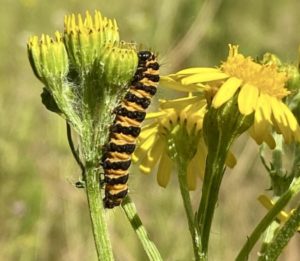
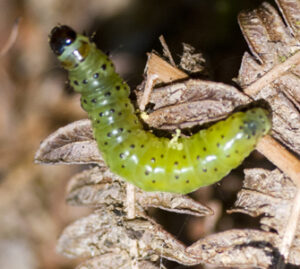
Cinnabar moth caterpillar.


  • Deter nocturnal moths from egg laying.
  • Make the night flying moths ‘easier targets’ for predators (such as bats).
  • Affect the feeding habits of moth caterpillars.

Whilst it would seem that night time light affects insects and the feeding behaviour of caterpillars,  quite how and why is yet to be determined.

]]>
0
The blog at woodlands.co.uk http://www.woodlands.co.uk <![CDATA[Moths – secret pollinators?]]> https://www.woodlands.co.uk/?p=42872 2025-11-24T19:56:59Z 2025-11-24T19:56:59Z

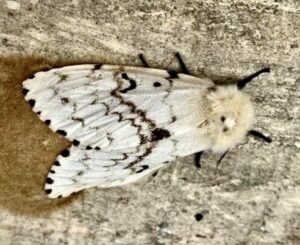
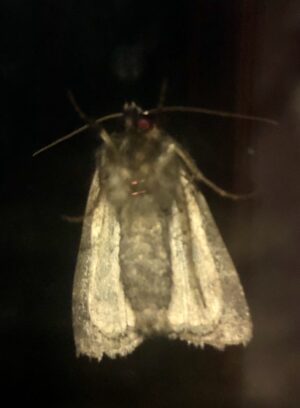
Honeybees, bumblebees and butterflies are always cited as being important for flower pollination. Indeed, without them many of our food crops would ‘fail’.  But what about moths?  Well, recent research has found that they too are efficient pollinators.  A recent study compared the role of nocturnal and day time pollinators.  Much scientific research has focused on daytime pollinators, like honey bees and bumblebees, but little is known about the night time pollinators. 

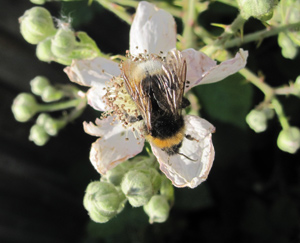
So a study was devised, which focused on the day and night visitors to bramble flowers. Bramble may be a bit prickly to us but for bees and other insects it is important source of nectar and pollen, from early spring through to autumn.  The study was carried out out in the summer moths (when night is only one third of the daily cycle).  Trail cameras were used to record visitors to the bramble flowers over three days, also special bags were used to cover the flowers for different times in order to determine the effectiveness of the different pollinators on pollination and fruit formation. 

  • One group of the bramble flowers was covered up for the three days. 
  • A second group was bagged up for the day time.  
  • The final set was covered only at night. 

The number of pollinator visits was recorded as was the resulting pollination and fruit formation.  

At night, moths were the only insect visitors of the pale pink / white flowers of the bramble, and they also proved to be very effective pollinators. It is not clear why moths were more effective, perhaps the time they spend visiting a flower is a critical factor.  They do spend more time rummaging in a flower than day time insects [hoverflies, butterflies, bees etc].    

There are only some sixty species of butterfly in the UK but over two thousand species of moth.  But like butterflies, moths are vulnerable with many of our larger moths in decline.  The challenges that they face as the same as those that threaten many insects namely:

  • Pesticides
  • Habitat loss
  • Climate change

But moths face an additional challenge - artificial light at night. This interferes with the feeding behaviour of their larvae / caterpillars, it also affects the feeding and breeding of the adults.   Thus, moths are not only important pollinators but a vital component to the biodiversity of an ecosystem.  They also are a food source bats and birds.

Moths can be helped by:

  • By allowing a patch of brambles and / or wild flowers in your garden
  • Persuading the council to allow wild flowers to grow and flourish on roadside verges, ‘spare’ plots of land etc.
  • Asking the local council to reduce night time lighting where it safe to do so.  
  • At home, limiting the use of outdoor lights at night, draw curtains and blinds to limit light spill to the exterior.

As insects are in decline generally, (see the  woodlands.co.uk splatometer blog) it is important to help our pollinators - ensuring that they still ‘have a home’ at the end of the day.


]]>
0
The blog at woodlands.co.uk http://www.woodlands.co.uk <![CDATA[The trouble with squirrels]]> https://www.woodlands.co.uk/?p=42787 2025-12-05T17:47:29Z 2025-11-17T11:04:14Z

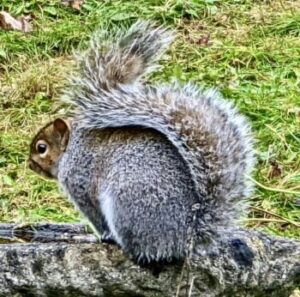
 The red squirrel is a native species, it has been present in the British Isles since the retreat of the glaciers of the last ice age -so around for some 10,000 years.  The grey squirrel on the other hand has only been here since the mid nineteenth century, when it was introduced from America.  Though relatively small numbers were introduced at stately homes, it did incredibly well and they spread out from their original sites, colonising woodlands and spreading across the country.  As the grey squirrel spread so the red squirrel retreated and its numbers declined.

Recent population estimates suggest that the grey squirrel population may now be as high as three million, whereas the red squirrel numbers are probably less than 300,000.

The grey squirrel is to be regarded as a pest.  Why ?

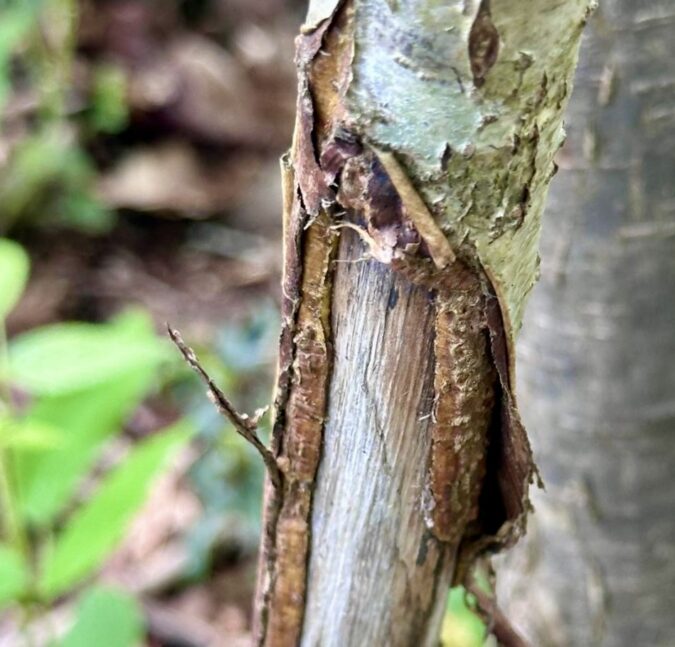
(a).   They strip bark from trees.   This is the main type of damage type of damage. The squirrels remove  bark to access the sap tissues underneath.

Squirrel damage

(b).   They cause the death of trees.  The damage to the bark and the underlying tissue can affect the flow of water and nutrients from soil to leaves.  It can also allow for the entry of pathogens (parasitic bacteria and fungi).

(c).   Their activities have an impact on the quality of timber that can be harvested.

(d).   They are associated with biodiversity loss, not only do they complete with and displace the native red squirrel, their presence can affect other woodland species such as songbirds (eat their eggs) and dormice.

(e).   Grey squirrels pass on the squirrel pox virus to red squirrels.  Once infected the red squirrels tend to die of dehydration and starvation.

[(f).   The grey squirrels that visit my garden dig up bulbs, like crocus, tulips and hyacinths.  They also make raids on soft fruits.]

Older damage by squirrels

There are measures to stop or limit grey squirrels from breeding.   One ‘extreme’ measure is shooting or trapping followed by euthanasia.  Another measure is the introduction of Pine Martens, they seem to control the numbers of grey squirrels whereas red squirrels have co-existed with Pine Martens in areas like north Scotland for many years.  

However, the Governments Animal and Plant agency is developing a contraceptive.  This is a vaccine based product which causes the squirrel’s immune system to render both males and females infertile.   The vaccine induces the formation of antibodies against the animals own reproductive hormones. The idea is to fed it to the grey squirrels through feeding hoppers that grey squirrels can access but not red squirrels or other animals. The bait will need to be palatable and attractive to the squirrels. Should this prove successful, it will be a non-lethal way of reducing the numbers of the grey squirrel without shooting or trapping.


For detailed information on the squirrel contraceptive project, visit https://aphascience.blog.gov.uk/2024/09/30/reducing-grey-squirrel-overpopulation/

Similarly, lots of information on squirrel damage here : https://www.observatree.org.uk/media/1425/identifying-squirrel-damage.pdf


]]>
4
The blog at woodlands.co.uk http://www.woodlands.co.uk <![CDATA[Changing times?]]> https://www.woodlands.co.uk/?p=42828 2025-11-09T10:45:54Z 2025-11-09T10:45:54Z

The Earth has experienced many glacial and interglacial periods over hundreds of thousands of years.  Since the last ice age, the Earth has warmed (the average global temperature has rising by some 4 to 5oC) but the temperature rise was about 0.1oC per century.  Today's warmer climate took 5,000–8,000 years to ‘evolve’, during which time the average global temperature rose at a rate of around 0.1oC every century.   This gradual change allowed trees to adapt to the changing climate.  In the last century, ‘we’ have driven a 1.3oC rise just in the last century - this is some ten times faster than the change post ice age. 

drought

Not only has the climate warmed, it has become increasingly unpredictable with heat waves, drought and torrential rain.  These can have dramatic effects on our trees and heathlands.  For example, the heatwave in 2022 resulted in Kew Gardens losing some 460 of its trees.  This last summer saw 4 periods of heatwave conditions.  

So, it is not surprising that some of our most familiar trees are struggling with these changed conditions.  They are stressed, and it would seem that the climate is not likely to moderate in the immediate future.  In recognition of the changing climate, Forestry England has produced a 'species for the future' list.  The trees in the list are those which might thrive in a warmer climate.

Whilst it includes familiar species like oak, birch, and alder, other species such as the coast redwood and Corsican pine are included,  which hopefully will create more resilient woodlands.  The trees are listed below

  • Aspen (Populus tremula)
  • Beech (Fagus sylvatica)
  • Coast redwood (Sequoia sempervirens)
  • Common alder (Alnus glutinosa)
  • Corsican pine (Pinus nigra subsp. laricio)
  • Douglas fir (Pseudotsuga menziesii)
  • Downy birch (Betula pubescens)
  • European silver fir (Abies alba)
  • Field maple (Acer campestre)
  • Grand fir (Abies grandis)
  • Grey alder (Alnus incana)
  • Hornbeam (Carpinus betulus)
  • Japanese red cedar (Cryptomeria japonica)
  • Lodgepole pine (Pinus contorta var. latifolia)
  • Macedonian pine (Pinus peuce)
  • Maritime pine (Pinus pinaster)
  • Norway spruce (Picea abies)
  • Pedunculate oak (Quercus robur)
  • Red oak (Quercus rubra)
  • Rowan (Sorbus aucuparia)
  • Scots pine (Pinus sylvestris)
  • Sessile oak (Quercus petraea)
  • Silver birch (Betula pendula)
  • Sitka spruce (Picea sitchensis)
  • Sweet chestnut (Castanea sativa)
  • Sycamore (Acer pseudoplatanus)
  • Western hemlock (Tsuga heterophylla)
  • Western red cedar (Thuja plicata)
  • Wild cherry (Prunus avium)
  • Wild service tree (Sorbus torminalis)

The list contains both native and non-native species, the aim is to create through planting stronger and more biodiverse woodlands that can tolerate our changing climate over the coming decades.  The rate of climate change is the main issue. Whilst some of the trees already grow here, others come come from warmer / drier areas, such as the Mediterranean or  North America. 

There are already many redwoods in the UK.  They were introduced in victorian times, when they were planted on the estates of the wealthy and landed gentry. There are now probably more redwoods in the UK than in their native Pacific Coast range,  there intense heat and dry weather has exposed them to intense forest fires. Another possibility to promote resilience is to use seed produced by trees such as Oak that has been ‘produced’ by trees growing in warmer regions.

The inclusion of trees that might be suited to our changing climate is often referred to as assisted migration.  However, the introduction of non-native species is not without its problems, for example the introduced species could become of invasive or add to the burden of pathogens that our trees are exposed too.

]]>
0
The blog at woodlands.co.uk http://www.woodlands.co.uk <![CDATA[A surfeit of ladybirds]]> https://www.woodlands.co.uk/?p=42737 2025-11-04T09:52:55Z 2025-11-04T09:52:55Z

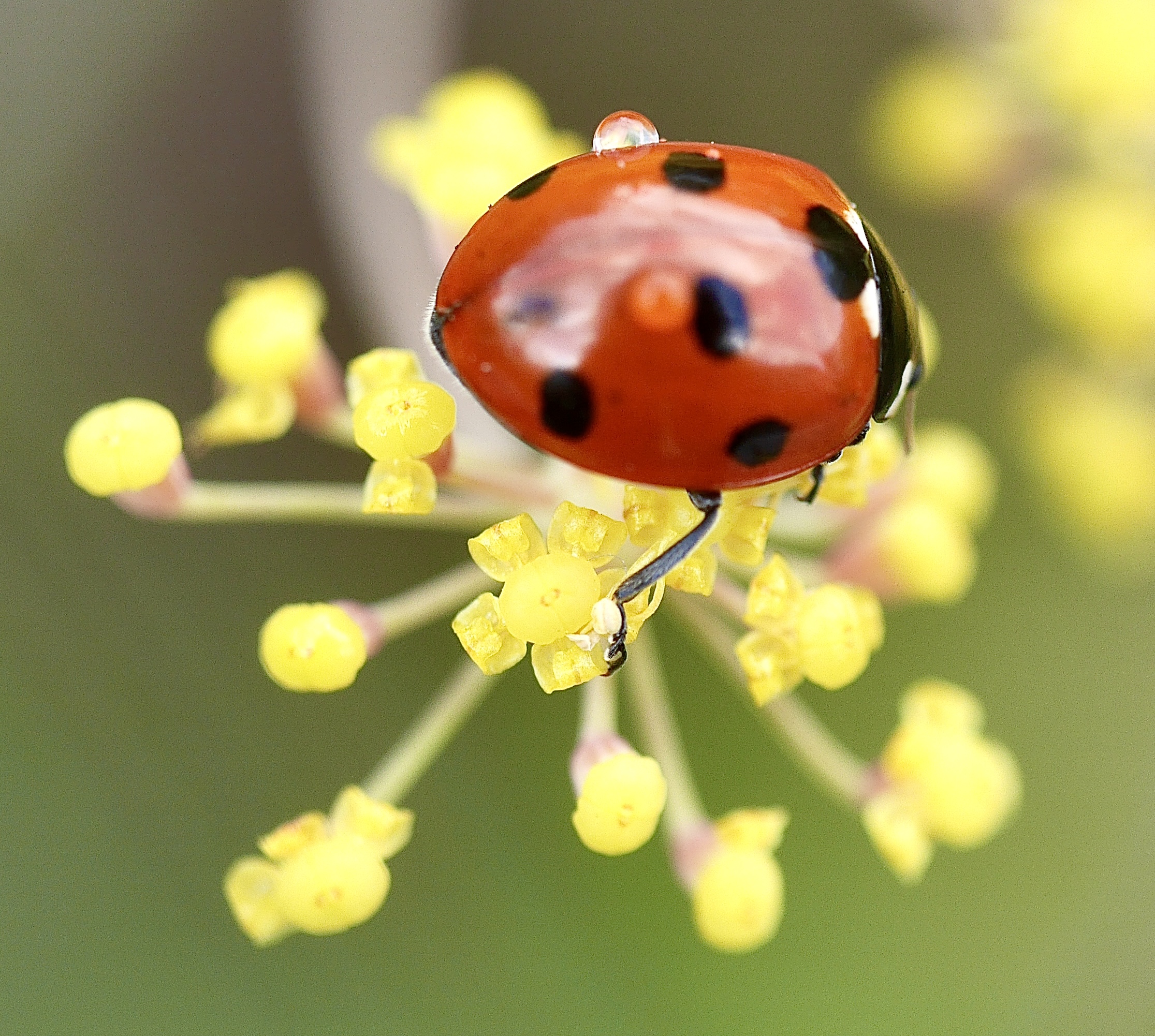
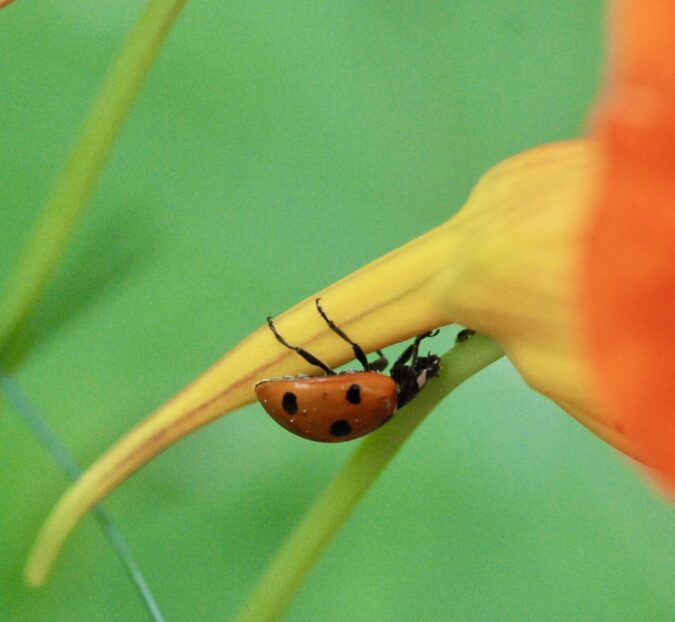
A surge in ladybird populations took place this summer. The seven spot ladybird is native to the UK.  "Millions" of the beetles invaded beaches and even cricket matches during the various heat waves.  At seaside venues, ladybirds massed on the beaches, landed on sunbathers, and covered cars.  The last time that we experienced a similar increase in ladybirds was during the hot (and dry) summer of 1976, though there have been sporadic ‘booms’ in the intervening years.  

The surge in ladybird (particularly the seven spot ladybird) numbers can be attributed to :-

  • The warm weather in early Spring and Summer
  • An abundance of food in the form of greenfly and blackfly (aphids).  Their numbers also increased with the warm weather, as their life cycle moves at a faster rate.   Aphids enter into a cycle where female aphids can give birth to live young, without fertilisation.  A process known as parthenogenesis.

Ladybirds in gardens help control aphids on roses and other plants by feeding on them.  They are very effective predators.  Predators have key role in keeping the balance of nature.

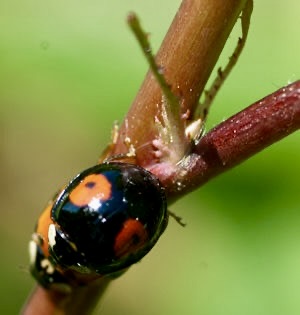
As the temperature falls, ladybirds look for places to overwinter. Native ladybirds tend to hibernate under logs, rocks, and in tree litter.  The harlequin ladybird which is an invasive asian species, may enter our homes. AS harlequin ladybirds have been introduced from warmer regions, so they seek out the warmth that houses offer.  People have found them on windows, doors and walls.  It is advisable to close windows and doors to limit their entry.  In their home range, harlequin ladybirds probably hibernate in big clusters in caves, hollow trees and other sheltered places.  Here their search for warmth tends to occur at the start of October.  Harlequin ladybirds are mainly to be found in the South-East though they have been spreading northwards. They have been implicated in the decline of native species. 

Interestingly, they harbour a sexually transmitted disease but not the sort that can affect us. It is a fungus [the Laboulbeniales fungus] that forms scales on the wing cases (elytra), which cover and protect their wings, or it appears as a yellow, finger-like outgrowths of the body. The fungus feeds off vital internal fluids. It is passed on through contact during mating or when the harlequin ladybirds huddle together whilst hibernating.


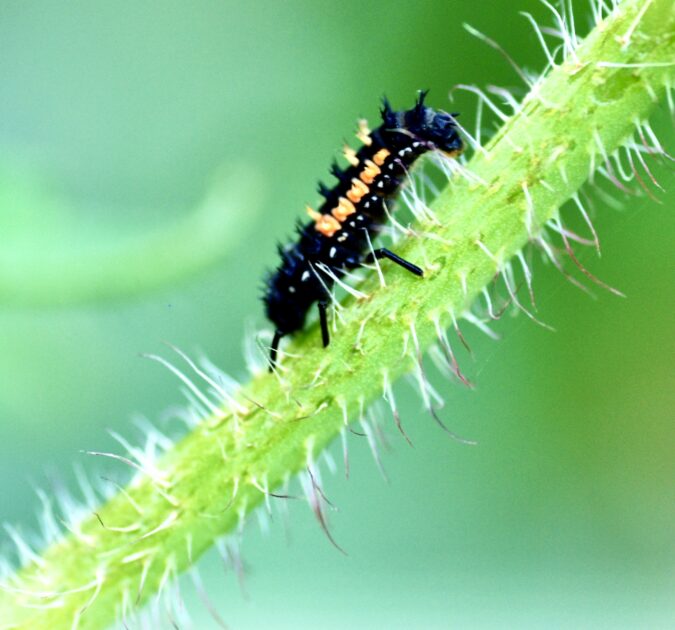
Larva of ladybird


]]>
2
The blog at woodlands.co.uk http://www.woodlands.co.uk <![CDATA[Prospecting for gold?]]> https://www.woodlands.co.uk/?p=42758 2025-10-31T09:58:06Z 2025-10-31T09:58:06Z

Mineral deposits (such as those containing copper.or tin) slowly release ions into the surrounding soils.  This release of ions occurs through chemical processes such as oxidation or through the activity of microbes.  Because of these processes, it is often the case that metals such as lead, cadmium, nickel and mercury can be found in plants.  Indeed, some are referred to as hyper accumulators.

Such plants might be used in phytomining.  This would involve growing hyper-accumulator plants on a metal-rich soil, harvesting the plants and then burning the plant biomass down to an ash  from which the metal might be reclaimed.   This would make sense economically where the metals were rare or of high intrinsic value.  In Finland, two species of willow trees (Salix schwerini and Salix viminalis) have been studied as agents of phytoremediation.  These trees can grow in acidic soils and can cope with with copper, zinc, nickel, chromium or lead contamination.  Initial research indicates that willows can help reduce zinc levels withinin six years under favourable conditions, though nickel, copper and chromium take much longer.

New research at the Finnish University of Oulu has indicated that even gold may move into certain plants.  The research team were studying Norway Spruce trees that were growing in the mineral deposit above a gold mine.  They took samples from a number of trees and analysed the leaves, and found that some had gold nanoparticles within the leaves.

These minute particles were surrounded by bacterial films. It would seem that certain spruce associated bacteria can help transform soluble gold from the soil into solid particles within the leaves.   The ‘soluble gold’ enters from the soil and is transported up to the needle-like leaves, where it is precipitated into solid form. The size of the particles is indeed microscopic, being only about a millionth of a millimetre in size.  Far too small to be extracted for commercial use.  

The process of biomineralisation is poorly understood, but it seems that certain endophytic bacteria (those that live within the plant) play a role in the process.


]]>
0
The blog at woodlands.co.uk http://www.woodlands.co.uk <![CDATA[Future proofing a woodland?]]> https://www.woodlands.co.uk/?p=42648 2025-10-23T09:06:59Z 2025-10-23T09:06:59Z

Woodlands provide us with number of benefits

  • They supply softwoods and hardwoods, which have variety of uses.
  • They provide a variety of habits for many species of wildlife, adding biodiversity to an area.
  • They allow for a number of recreational pastimes.

However, we and our woodlands need to prepare and adapt to a changing climate, one in which winters may be milder and summers hotter and drier.  Extreme weather events are also becoming more common.  So woodlands need to be resilient.  If they are resilient, then:

  • They recover better from disturbances, like fire or disease
  • Generally fare better when challenged by storms or floods.

A number of government agencies have produced booklets / downloadable files (PDFs) on how to address the possible problems associated with the changing climate.  The advice seems to fall into three basic categories.

  1. Increase the range of trees in your woodland, promote diversity.  Look for trees that not only match your site (soil, aspect etc) but also might cope with future climate conditions.  If the climate is drier, then trees which have done well in the past might struggle in the new conditions.  For example, beech was noticeably affected by the drought in the summer of 1976.  Look for trees that can cope or unaffected by disease and insect pests and are from a reputable source and free of disease.
  2. Review the management of your woodland. For example, what and when to thin, create access and paths, openings or glades which can improve the diversity of the plants at ground level.  Paths and openings will also improve access within your woodland.

    mast strewn woodland path

    Woodland path covered with mast

  3. When planting new trees, think about where the trees come from. What conditions do they are experience in their home environment, can they cope with drought. It may be that trees species that usually grow in more southerly areas of Europe will be better suited to the changing conditions.

As mentioned above there are a number of publications / guides to help with increasing the resilience and diversity of your woodland.  Some of these are listed in the links below :

]]>
1
Kathryn <![CDATA[Our happy place.]]> https://www.woodlands.co.uk/?p=42583 2025-10-17T08:59:47Z 2025-10-17T08:59:47Z

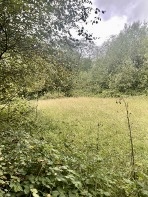
In May 2025 my husband was on one of his usual runs and saw a sign saying woodlands for sale. We have looked for many years for a piece of land near to our home and this one turned out to be 12 minutes from where we lived. We found the particulars and made a visit to a 24 acre parcel of land which had one third covered with ancient woodland, and the rest being a pony paddock and a field. We put in an offer which was accepted and three months later we found ourselves the custodians of this beautiful 24 acre site

.

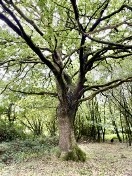
The land when we took it over 3 weeks ago was in quite a poor state. The previous owner had solely used it for her 3 horses, so the ancient woodlands, which contain mostly broadleaf oaks, was neglected and is in need of a huge amount of work.

On walking the site over the last few weeks we have discovered a huge amount of fallen trees, very saturated ground and poorly cared for trees. The amount of brambles and nettles on the site is astronomical and will be a mammoth task to clear.

In the last week we have managed to strim a path right around the perimeter to our fence line. The site has become our “happy place “ which our adult children also love. We have big plans for its future, creating paths, educating future generations and becoming good caretakers for the future of this beautiful place.

“We do not inherit the earth from our ancestors, we borrow it from our future generations.”

]]>
2
Laura <![CDATA[Forest school leader in the making]]> https://www.woodlands.co.uk/?p=42774 2025-10-16T08:08:23Z 2025-10-16T08:08:23Z

I am in the process of becoming qualified to become a Forest School Leader, with the aim to run sessions in the future for all age groups. I have created a ‘policies and procedures handbook’ which includes risk assessments for every activity, accident plan, vision statement, qualifications, forest school principals, safe working procedures, risk benefit plan, and insurance details. So far, I have taught a range of lessons over a couple of weekends to a lovely family where they are learning new skills, cooking on the fire, and learning how to protect our woodland environment. Most importantly, they’ve had valuable time as a family where they can bond over their woodland experiences and chat whilst toasting marshmallows over the fire. 

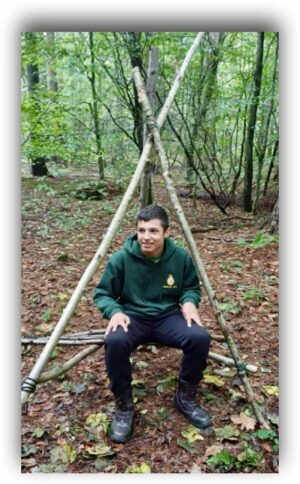
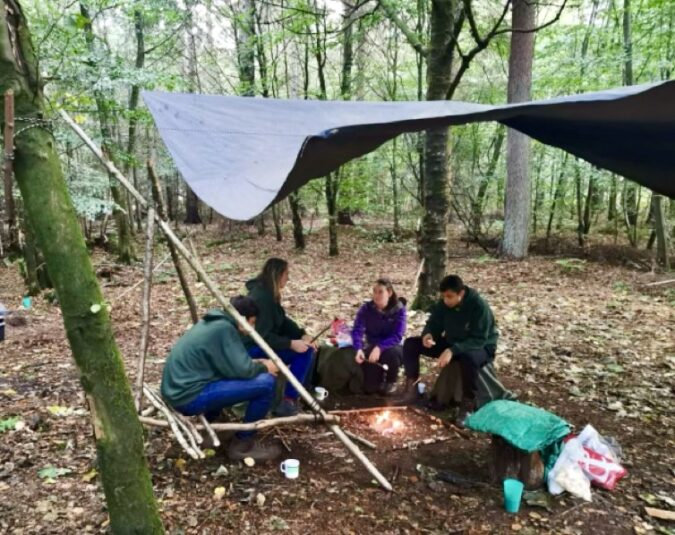
The first session was an introduction to what Forest School is all about and snippets of what I aim to deliver over the next few months. I met them at the station car park and walked them up to the woodland site and gave them a site orientation, identifying the boundaries and the admin area. They had a chance to explore the woods for themselves and then I gave a knot tying lesson. I demonstrated a few different types of knots including the reef knot and clove hitch, and they were able to practice these by making a rope swing, putting up ponchos and making a tripod chair. The real challenge was to see if they could sit on it with their whole-body weight! 
Fire starting was the next activity and they got stuck in straight away and collected deadwood from the ground and formed the sticks up. After a few attempts at striking their flints and lots of perseverance, they got the fire going and layered on the sticks to keep it a light. This was not complete without toasted marshmallows on sticks, s’mores and a hot chocolate! Listening to the crackling of the fire, the warmth on their faces, the gooey marshmallows and good conversations were their favourite part of the day. They also had a lesson on a different type of fire, a Dakota firepit. Here, they learnt the benefits of having an underground fire and what they can cook too on it. Like every lesson, we talk about leaving no trace, so it was important that the end of the session we cleared away all the burnt sticks and logs and picked up any litter. 

The second session we learnt about the layout of a woodland and all the animals. Working from the ground layer all the way to the canopy, we identified different animals and species that live or roam here. We discussed the benefits of natural habitats, human disturbance, and how we can encourage animals into the area. By learning to appreciate our surroundings, our respect and love for the outdoors will last forever. 

After giving them a few ideas, they individually went away and made their own habitats. They came up with really creative ideas and it was fantastic to see them thinking about how they can protect the animals and keep them safe. They came up with a bird hide, tripod shelter, bug hotel, and tee-pee tent. It was great to see them using their knot tying skills from the previous session and putting it into practice. At the end of the lesson, we all walked around everyone’s habitats so they could describe and show off what they have made.

Today’s session was all about cooking on the fire. They went straight into collecting sticks to burn on the fire, logs for the boundaries, and sticks for whittling so they can put their food onto them for toasting. The first challenge was preparing the food mixture to make damper bread; they got all the ingredients into a bowl and made a very sticky job of mixing it with their hands! Once they had a nice doughy mixture, they spun it around their sticks and started toasting them on the fire. Having a nice burnt, crispy outer dough with a drizzle of hot honey was by far the favourite! 
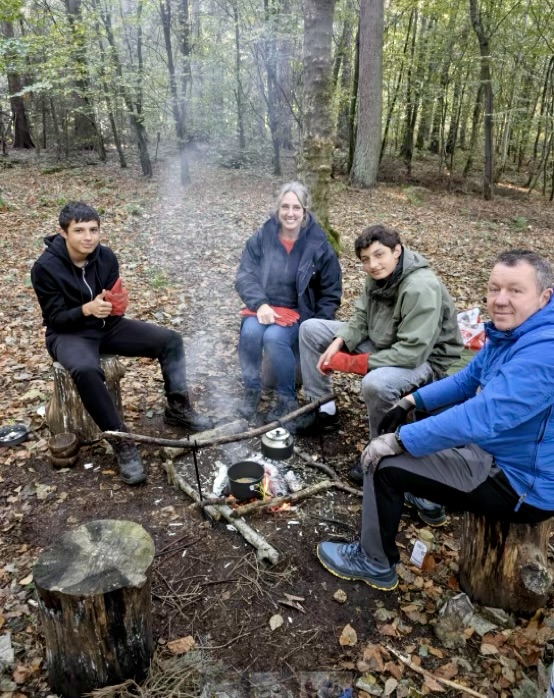
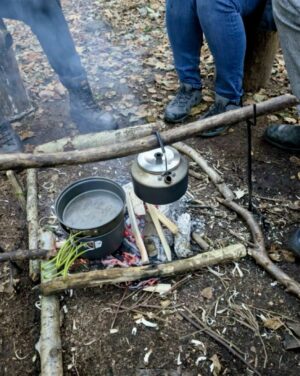
Next, we learnt how to cook on the embers, and of course, there are only two ways to teach this, popcorn and chocolate banana boats! This went down a treat as they hadn’t had this before; they prepared their chocolates in bananas, wrapped it up in tin foil, and using a fire glove, they put them onto the embers for 5 minutes. 5 minutes of cooking, 30 seconds of eating and they were all gone, success! The popcorn was also a hit, listening to the popping against the tins and then drizzling hot honey sauce over them to make them nice and sweet. With all this tasty work, we couldn’t go a miss without having a hot chocolate. We put stakes into the ground either side of the fire pit, laid a log across the top and hung our kettle from the middle over the flames. 

What was really nice to observe was the fact that they were all communicating when making the damper bread, chatting away whilst collecting sticks, and having a laugh whilst waiting for their food to cook was priceless. Meaningful conversations in an outdoor environment are so valuable and good for everyone’s wellbeing and this is at the forefront of why I want to become a forest school leader. 

Laura


]]>
2